

LS 5.3 Manual Transmission: A Comprehensive Guide
Embarking on an LS 5.3 swap with a manual transmission offers thrilling performance and control. This guide details options, challenges, and solutions for a successful conversion.
The LS 5.3 engine swap has become incredibly popular, known for its reliability, affordability, and potential for significant power gains. Combining this potent V8 with a manual transmission elevates the driving experience, offering greater driver engagement and control. This combination is frequently undertaken in various platforms, including classic Chevrolet squarebodies and BMW 3 series.
However, successfully integrating an LS 5.3 with a manual gearbox requires careful planning and component selection. Numerous transmission options exist, each with unique characteristics regarding strength, cost, and installation complexity. Understanding these nuances is crucial for a smooth and satisfying swap. This guide will navigate the process, covering essential aspects from engine generations to wiring and tuning considerations.

Why Choose a Manual Transmission for Your LS 5.3?
Opting for a manual transmission with your LS 5.3 fundamentally transforms the driving experience. It provides a direct connection between driver and machine, enhancing control and engagement. Beyond the enjoyment factor, manual transmissions often offer improved efficiency and potentially lighter weight compared to automatics.
For enthusiasts undertaking LS swaps, a manual gearbox allows for greater customization and avoids the complexities of automatic transmission tuning. It’s a popular choice for projects prioritizing a raw, visceral feel and a more involved driving style, offering a rewarding alternative to conventional setups.
Common LS 5.3 Engine Generations
The LS 5.3 engine has evolved through several generations, each with unique characteristics impacting manual transmission swaps. Gen 3 (1999-2007) engines, like the LM7 and L59, are known for their simplicity and affordability. Gen 4 (2005-2013) versions, including the L33 and LY5, introduced advancements like active fuel management.
More recent Gen 5/EcoTec3 (2014-Present) engines, such as the LMG and LC9, feature direct injection and improved efficiency. Understanding these differences is crucial when selecting compatible transmissions and tuning parameters for your specific LS 5.3 build.
Gen 3 LS Engines (1999-2007)
Gen 3 LS engines, particularly the 5.3L LM7 and L59, are popular choices for manual swaps due to their cost-effectiveness and readily available parts. These engines generally utilize a 24x crankshaft reluctor wheel, influencing PCM compatibility. They are known for their robust iron blocks and straightforward design, simplifying the conversion process.
However, older Gen 3s may require more extensive wiring modifications for manual transmission control. Careful consideration of the PCM and VSS integration is vital for a smooth and reliable manual swap with these earlier LS engines.
Gen 4 LS Engines (2005-2013)
Gen 4 LS engines, like the L33, LY5, and LMG, offer advantages for manual swaps with their 58x crankshaft reluctor wheel, often simplifying PCM compatibility compared to Gen 3s. These engines frequently feature active fuel management (AFM), which can be disabled during tuning for improved performance and reliability.
Aluminum blocks became more common in later Gen 4s, reducing weight. However, careful planning regarding motor mounts and adapter plates is crucial, ensuring correct alignment for a successful manual transmission installation.
Gen 5/EcoTec3 LS Engines (2014-Present)
Gen 5 and EcoTec3 LS engines, such as the LT1 and L84, present unique challenges for manual swaps due to their direct injection and more complex engine management systems. While offering impressive power potential, these engines typically require more extensive wiring and tuning modifications for compatibility with older transmissions.
The 58x reluctor ring remains consistent, but adapting these engines to a traditional manual setup demands careful consideration of the PCM and associated sensors. Adapter plates and motor mounts must be specifically designed for these newer blocks.

Popular Manual Transmission Options for LS 5.3
Several manual transmissions pair well with the LS 5.3, including the T-56 Magnum, Tremec TKO, and NV3500, each offering distinct advantages and considerations.
T-56 Magnum Transmission
The Bowler GM LS T-56 Magnum is a popular choice for LS 5.3 swaps, renowned for its strength and suitability for high-horsepower applications. It’s a robust six-speed manual transmission designed to handle significant power. Advantages include its wide gear ratios, enhancing both acceleration and highway cruising.
However, installation requires careful planning. Considerations include ensuring proper fitment with your specific LS engine and vehicle, potentially needing modifications to the transmission tunnel. Clutch compatibility and selecting the correct flywheel are also crucial aspects of a successful T-56 Magnum installation.
Bowler GM LS T-56 Magnum Details
The Bowler GM LS T-56 Magnum is specifically designed for LS engine swaps, offering a direct fit for many applications. It boasts stronger internals compared to the standard T-56, handling up to 600 horsepower. Gear ratios are optimized for performance, providing a balance between acceleration and top-end speed.
This transmission typically includes a 26-spline output shaft, requiring a compatible driveshaft. It’s available in various configurations, including those with or without a speed sensor. Careful attention to detail during installation is vital for optimal performance and longevity.
Advantages of the T-56 Magnum
The T-56 Magnum delivers significant performance benefits for LS 5.3 swaps. Its robust construction and stronger internals allow it to reliably handle increased horsepower and torque. The close-ratio gears provide enhanced acceleration and a more engaging driving experience.
Compared to older transmissions, the Magnum offers improved shift quality and reduced noise. It’s a popular choice for enthusiasts seeking a high-performance manual transmission solution, offering a blend of durability, drivability, and readily available support.
Considerations for T-56 Magnum Installation
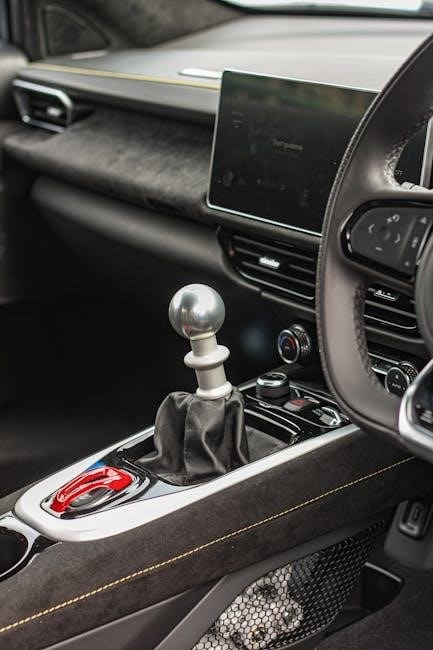
Installing a T-56 Magnum requires careful planning. A transmission spacer might be necessary depending on the engine and vehicle combination, ensuring proper alignment. Correct motor mounts are crucial; verify compatibility with LS engine plate patterns (3-bolt or 4-bolt).
Vehicle Speed Sensor (VSS) integration can be complex, particularly with Vortec PCMs, potentially causing stalling. Custom PCM tuning is essential for correct shift points and speedometer calibration. Budget for additional components like a clutch kit and potentially a modified driveshaft.
Tremec TKO 500/600 Transmission
The Tremec TKO 500 and 600 transmissions are renowned for their robust construction and positive shift feel, making them excellent choices for LS 5.3 swaps. These transmissions offer significant strength and durability, handling substantial power levels with ease.
When comparing costs, the TKO transmissions generally fall between the T-56 Magnum and more budget-oriented options like the NV3500. Careful consideration of gear ratios is vital to optimize performance for your specific vehicle and intended use.
Tremec TKO Transmission Overview
Tremec TKO transmissions represent a classic, highly regarded option for LS swaps seeking a traditional manual experience. Available in both 500 and 600 variants, they provide a strong, reliable platform for handling the torque produced by the 5.3L engine.
These transmissions are known for their straightforward design and relatively easy installation process. They offer a distinct, mechanical feel that many enthusiasts appreciate, delivering a connected driving experience. Careful planning regarding shifter placement is crucial for optimal ergonomics;
Strength and Durability of TKO Transmissions
Tremec TKO 500 and 600 transmissions boast impressive strength and durability, making them suitable for a wide range of LS 5.3 applications. The TKO 500 generally handles up to 350 ft-lbs of torque, while the TKO 600 extends that capability to around 450 ft-lbs.
Constructed with robust internal components, these transmissions are designed to withstand the stresses of spirited driving and occasional track use. Regular maintenance, including fluid changes, is vital to ensure long-term reliability and prevent premature wear.
Cost Comparison: TKO vs. T-56 Magnum
When considering cost, the Tremec TKO 500/600 generally presents a more budget-friendly option upfront, typically ranging from $1,500 to $2,500 depending on configuration. The Bowler T-56 Magnum, however, usually commands a higher price, often between $2,500 and $3,500 or more.
This price difference reflects the T-56 Magnum’s more advanced features and higher torque capacity. Factor in additional expenses like shifters, clutch kits, and installation costs when evaluating the overall investment for each transmission.
NV3500 Transmission
The NV3500 transmission stands out as a remarkably budget-friendly manual option for LS 5.3 swaps, offering a viable path for those prioritizing affordability. It’s known for its relative simplicity and widespread availability, making it easier to source and potentially rebuild; However, it’s crucial to acknowledge its limitations.
The NV3500 generally has a lower torque capacity compared to the T-56 Magnum or TKO series, and its shift quality isn’t always as refined. Careful consideration of your power goals is essential before choosing this transmission.
NV3500: A Budget-Friendly Option
For LS 5.3 swappers watching their wallets, the NV3500 transmission presents an attractive, cost-effective solution. It’s frequently found in older trucks and offers a straightforward manual conversion path without the premium price tag of higher-performance alternatives. Sourcing a used NV3500 is often quite easy, further reducing initial expenses.
However, remember that “budget-friendly” often means trade-offs. While capable for moderate power levels, the NV3500’s durability and refinement aren’t on par with more expensive transmissions. Careful planning and realistic expectations are key.
NV3500 Limitations and Considerations
The NV3500, while affordable, has limitations for high-horsepower LS 5.3 builds. Its internal components aren’t as robust as the T-56 Magnum or TKO series, potentially leading to premature wear or failure with significant power increases. Shift quality can also be less precise compared to more modern transmissions.
Consider the NV3500’s input shaft torque rating carefully. Additionally, VSS integration with Vortec PCMs can be tricky, potentially requiring custom tuning or signal adaptation to maintain accurate speedometer readings and proper engine operation.

Essential Components for a Successful Swap
A smooth LS 5.3 manual swap demands careful component selection, including a compatible flywheel, clutch kit, and properly fitted motor mounts and adapter plates.
Flywheel Selection

Choosing the correct flywheel is paramount for a successful LS 5.3 manual transmission swap. Compatibility with your chosen transmission – T-56 Magnum, TKO, or NV3500 – is the initial consideration. You’ll encounter choices between dual-mass and single-mass flywheels, each offering distinct characteristics.
Dual-mass flywheels dampen engine vibrations, providing a smoother driving experience, but are generally heavier and more expensive. Single-mass flywheels are lighter, potentially improving engine response, but may transmit more vibration. Ensure the flywheel’s bolt pattern matches your engine’s configuration (3-bolt or 4-bolt) as noted in resources, avoiding fitment issues.
Choosing the Right Flywheel for Your Transmission
Selecting the ideal flywheel hinges on your transmission type and intended use. For a T-56 Magnum, a flywheel specifically designed for this transmission is crucial for proper balance and clutch engagement. TKO 500/600 installations require a compatible flywheel with the correct input shaft pilot bore. The NV3500, being a heavier-duty transmission, often pairs well with a robust single-mass flywheel.
Consider your power goals; higher horsepower levels necessitate a stronger flywheel material. Verify the flywheel’s weight and diameter align with your transmission’s specifications to prevent operational issues.
Dual-Mass Flywheels vs. Single-Mass Flywheels
Dual-mass flywheels (DMFs) excel at dampening engine vibrations, enhancing comfort, and reducing drivetrain stress, but are costly and heavier. They’re less common in performance LS swaps due to their complexity and potential failure points. Single-mass flywheels (SMFs) are lighter, more affordable, and simpler, offering increased durability for high-performance applications.
However, SMFs transmit more vibration. For street-driven LS 5.3 swaps, a well-balanced SMF is often sufficient. Track-focused builds benefit from the strength of an SMF, prioritizing performance over comfort.
Clutch Kits
Selecting the correct clutch kit is crucial for an LS 5.3 manual swap. Consider your engine’s power output and intended use. Higher horsepower demands a more robust clutch disc, pressure plate, and throw-out bearing. Kits are available for various power levels, from mild street applications to aggressive track setups.
Pay attention to clutch diameter and spline count to ensure compatibility with your chosen transmission. Upgrading to a performance clutch enhances durability and prevents slippage under load, maximizing power transfer.
Clutch Kit Considerations for LS 5.3 Power Levels
For LS 5.3 engines making under 400 horsepower, a standard street clutch kit typically suffices, offering a balance of drivability and durability. Above 400 horsepower, a performance clutch with a heavier-duty pressure plate is recommended to prevent slippage. Beyond 500 horsepower, consider a twin-disc clutch for superior holding power.
Factor in your driving style; aggressive launches and track use necessitate a more robust setup. Ensure the clutch kit’s torque capacity exceeds your engine’s peak output for reliable performance and longevity.
Hydraulic vs. Cable Clutch Systems
Hydraulic clutch systems offer a lighter pedal feel and more consistent engagement, favored for performance applications and daily driving. They require more complex plumbing but provide superior modulation. Cable clutch systems are simpler to install and maintain, often more cost-effective, but can exhibit a heavier pedal and less precise feel.
Compatibility with your transmission and vehicle is crucial. Some transmissions require hydraulic setups, while others can accommodate either. Consider ease of adjustment and potential for future upgrades when making your choice.
Motor Mounts & Adapter Plates
Correct motor mounts are vital for a secure and vibration-free LS 5.3 swap. LS engines utilize different mounting patterns – 3-bolt (early) and 4-bolt (later). Ensure your mounts match your engine’s bolt pattern and your vehicle’s chassis. Adapter plates may be necessary if your chassis doesn’t directly accommodate the LS engine’s mounting points.
Quality mounts minimize engine movement, improving handling and preventing stress on components. Ordering mounts specifically designed for LS swaps is highly recommended, verifying the correct engine plate pattern.
Importance of Correct Motor Mounts
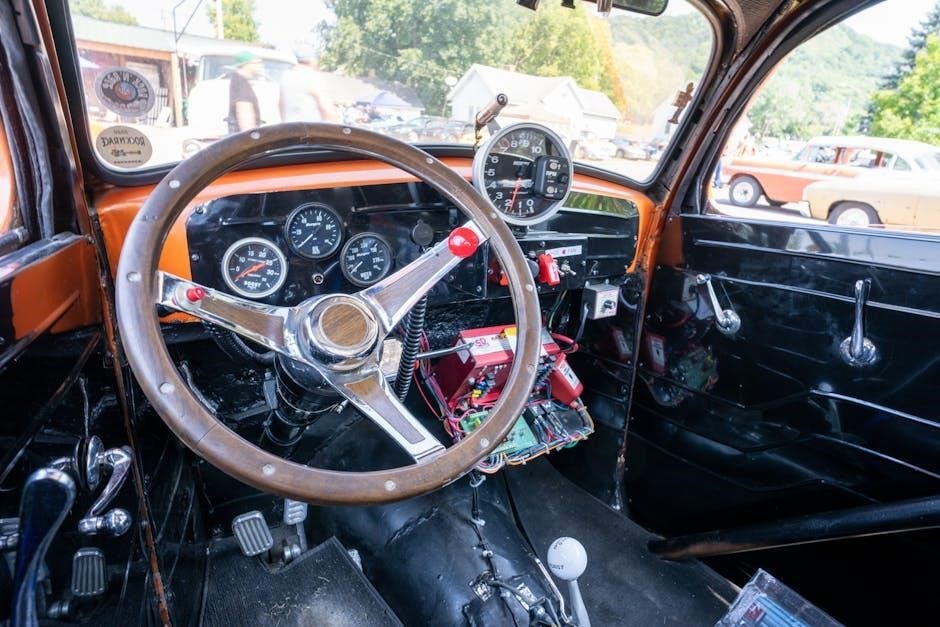
Utilizing the correct motor mounts is paramount for a successful LS 5.3 manual transmission swap. They directly impact engine alignment, reducing vibrations transmitted to the chassis and improving overall driving experience. Incorrect mounts can cause premature wear on surrounding components, like hoses and wiring harnesses.
Properly aligned mounts also contribute to optimal drivetrain geometry, maximizing performance and minimizing stress on the transmission. Investing in high-quality, swap-specific mounts ensures longevity and reliability, preventing potential failures down the road.
LS Engine Plate Patterns (3-bolt vs. 4-bolt)
Understanding LS engine plate patterns is crucial when selecting motor mounts. Early LS engines (Gen 1 & some Gen 2) utilize a 3-bolt pattern, while later LS engines (most Gen 3, 4, and 5) employ a 4-bolt configuration. This difference is significant, as mounts designed for one pattern won’t fit the other.
When ordering mounts, verify the bolt pattern of your specific LS 5.3 engine. Many swap kits offer adapters, but it’s often simpler to purchase mounts specifically designed for your engine’s pattern, ensuring a direct and secure fit.
Wiring & Tuning Considerations
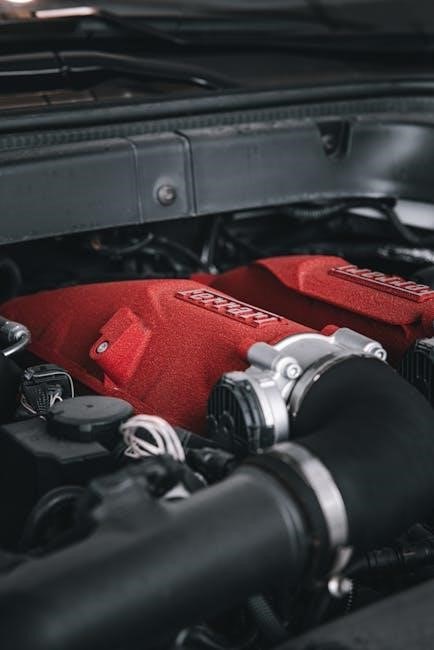
Successful LS swaps require careful wiring and PCM tuning, especially for manual transmissions. Addressing the vehicle speed sensor is vital for proper operation.
Vehicle Speed Sensor (VSS) Integration
Integrating the Vehicle Speed Sensor (VSS) presents unique challenges during an LS 5.3 manual transmission swap, particularly when utilizing a Vortec PCM. The PCM relies on the VSS signal for crucial functions like speedometer calibration and proper transmission operation. Without a correct signal, the engine may stall or exhibit erratic behavior.
A common issue arises because the Vortec PCM expects a specific VSS signal that differs from what a manual transmission provides. Solutions involve utilizing VSS signal generators or adapting the wiring to create a compatible signal. Careful consideration and potentially custom tuning are essential to ensure accurate speedometer readings and optimal engine performance.
VSS Issues with Vortec PCM & Manual Transmissions
The Vortec PCM, commonly used in LS swaps, presents specific hurdles when paired with a manual transmission due to its reliance on the vehicle speed sensor (VSS). Originally designed for automatic transmissions, the PCM expects a pulse signal generated by the transmission’s output shaft. Removing this signal source during a manual swap often results in the PCM incorrectly interpreting vehicle speed.
This misinterpretation can lead to issues like inaccurate speedometer readings, incorrect shift points (if a tune isn’t adjusted), and even engine stalling. The engine may attempt to compensate for a perceived lack of movement, causing operational problems. Addressing this requires signal adaptation or a VSS buffer.
Solutions for VSS Signal Compatibility
Several solutions exist to ensure VSS signal compatibility with a Vortec PCM during an LS manual swap. A common approach involves utilizing a VSS buffer, which converts the signal from the manual transmission’s output shaft (or a standalone speed sensor) into a format the PCM recognizes. Alternatively, some tuners can modify the PCM calibration to account for the altered signal.
Another method involves using a standalone VSS signal generator, providing a consistent pulse to the PCM. Careful wiring and proper tuning are crucial for accurate speedometer calibration and optimal engine performance. Selecting the right solution depends on the specific transmission and PCM setup.
PCM Tuning for Manual Transmissions
Custom PCM tuning is absolutely essential for a successful LS 5.3 manual transmission swap. The factory calibrations are designed for automatic transmissions and won’t function correctly with a manual setup. Tuning ensures proper operation, including accurate speedometer calibration, correct shift points (even though manually controlled), and optimal engine performance.
A skilled tuner can disable torque management, adjust fuel curves, and optimize ignition timing for the manual transmission. This process addresses the engine’s tendency to die upon unloading without an automatic transmission, a common issue during swaps.
Importance of Custom Tuning
Custom tuning isn’t merely recommended; it’s fundamentally necessary for a reliable and enjoyable LS 5.3 manual swap. Stock calibrations assume an automatic transmission, leading to suboptimal performance and potential driveability issues with a manual. A custom tune optimizes the engine’s parameters specifically for the manual setup, unlocking its full potential.
Without it, you risk incorrect speedometer readings, poor throttle response, and even engine stalling. A skilled tuner will address these concerns, ensuring smooth operation and maximizing the benefits of your LS swap. It’s a crucial investment.
Tuning for Correct Shift Points and Speedometer Calibration
Precise tuning addresses critical aspects of a manual LS 5.3 swap: shift points and speedometer accuracy. The PCM needs reprogramming to recognize the manual transmission’s gear ratios and adjust shift points for optimal performance and driving experience. Incorrect shift points can lead to sluggish acceleration or excessive engine braking.
Furthermore, the vehicle speed sensor (VSS) signal must be correctly interpreted by the PCM to ensure an accurate speedometer reading. Proper calibration is vital for legal compliance and safe driving, avoiding discrepancies between actual and indicated speed.

Potential Challenges & Solutions
LS swaps can present hurdles like transmission spacer needs and potential weak points. Careful planning, quality components, and preventative maintenance are key to success.
Transmission Spacer Requirements
Determining if a transmission spacer is necessary during your LS 5.3 manual swap is crucial for proper alignment. Some applications, particularly when mating the LS engine to a non-factory transmission, will require a spacer. This ensures the engine and transmission bolt together correctly, preventing undue stress on components.
Identifying spacer needs involves careful measurement and consideration of the transmission’s input shaft length relative to the LS engine’s rear mounting surface. Online forums and swap-specific guides often detail spacer requirements for various vehicle combinations. Ignoring this step can lead to significant issues, including clutch alignment problems and premature failure.
When is a Spacer Needed?
A transmission spacer becomes essential when the LS engine’s crankshaft flange doesn’t align perfectly with the transmission’s input shaft. This misalignment frequently occurs when adapting a manual transmission originally designed for a different engine family. Specifically, marrying the LS to a stock, older transmission often necessitates a spacer.
Furthermore, if the engine’s rear mounting surface is positioned further forward than anticipated, a spacer bridges the gap. Incorrect mounting can cause clutch disc angle issues, leading to wear and difficulty shifting. Careful measurement and research are vital to determine if a spacer is required for your specific setup.
Identifying Spacer Needs for Your Application
Determining spacer requirements involves meticulous measurement during the LS swap process. Begin by trial-fitting the engine and transmission; check for crankshaft flange to input shaft alignment. If there’s a noticeable gap or angle, a spacer is likely needed. Measure the distance required for proper alignment with precision.
Consult online forums and LS swap communities for experiences with similar vehicle and transmission combinations. Researching specific setups can reveal common spacer thicknesses. Remember, incorrect alignment stresses the clutch and transmission, so accurate identification is crucial for longevity.
Common LS Swap Failures & Prevention
LS swap failures often stem from overlooked details. Weak points include improper VSS integration causing PCM issues, leading to stalling or inaccurate readings. Incorrect motor mount selection or inadequate flywheel/clutch matching can induce vibrations and premature wear. Failing to address these can cause catastrophic damage.
Preventative measures involve thorough research, quality components, and precise installation. Double-check alignment, wiring, and tuning. Utilize a properly matched flywheel and clutch kit rated for your power level. Regular maintenance, including fluid changes, extends the swap’s lifespan.
Addressing Potential Weak Points

Several areas require focused attention during an LS 5.3 manual swap. The VSS signal, crucial for speedometer and PCM function, is a common failure point, especially with Vortec engines. Ensure compatibility or utilize aftermarket solutions. Flywheel and clutch alignment are paramount; improper setup causes vibrations and wear.
Inspect motor mounts regularly for cracking or movement. Address any issues promptly. Finally, the transmission itself—particularly budget options like the NV3500—may have limitations at higher power levels, necessitating upgrades or careful driving habits.
Preventative Maintenance for Longevity
To maximize the lifespan of your LS 5.3 manual swap, diligent maintenance is key. Regularly inspect the clutch for slippage or unusual wear, and change the fluid according to manufacturer recommendations. Monitor transmission fluid levels and condition, addressing leaks immediately.
Periodically check motor mount integrity and tighten any loose bolts. Routine PCM tuning checks ensure optimal performance and prevent potential issues. Finally, proactive flywheel and U-joint inspections contribute to a reliable and enjoyable driving experience.